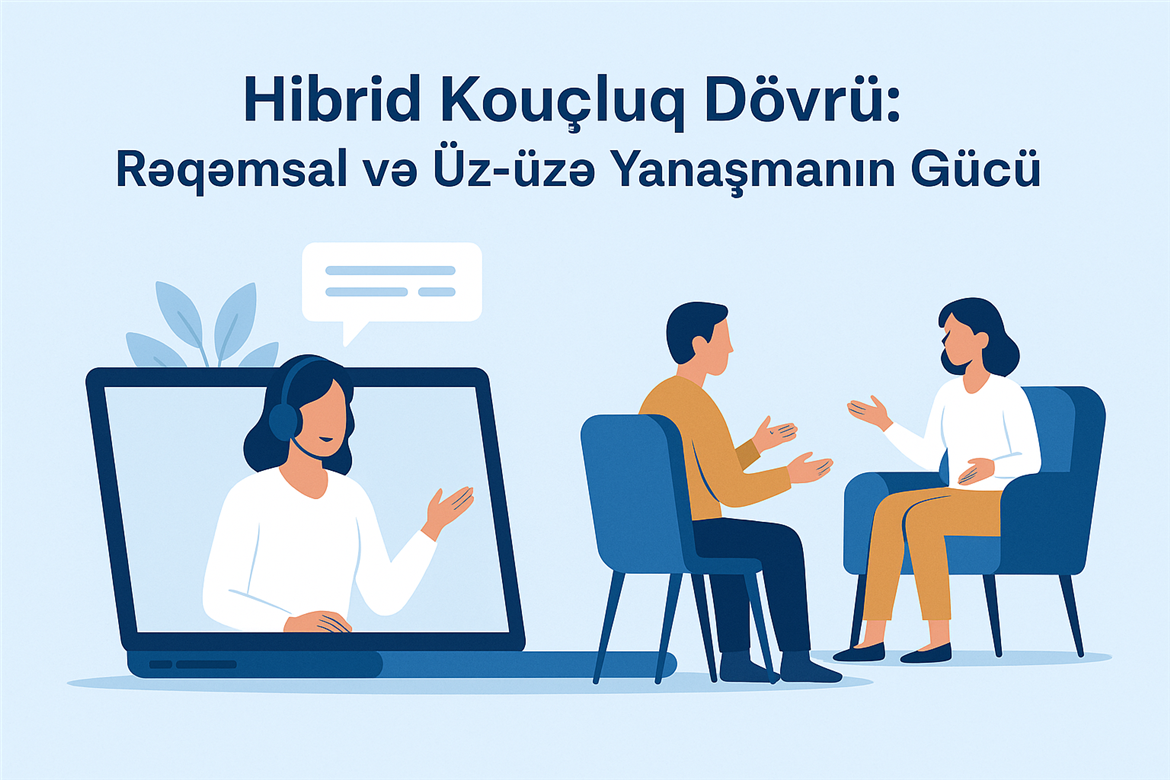
The Era of Hybrid Coaching: The Power of Digital and Face-to-Face Approaches
Introduction
The world is changing. Not only spaces, but also forms of interaction are being redefined. Just like education, business, and relationships—coaching has also been transformed by this shift. What once began with two people sitting across a table now often starts through screens—yet can continue with the same level of authenticity.
The strongest reflection of this transformation is hybrid coaching. A model where digital convenience meets face-to-face depth—independent of time and space, yet sensitive to human emotional needs.
So, what is hybrid coaching? Why is it so effective? And how can we design this new model?
Advantages and Limitations of Online Coaching
Online coaching is a powerful tool that entered our lives during the pandemic and has since become permanent.
Advantages:
- Location independence: Geographical boundaries disappear.
- Time flexibility: Sessions can be scheduled conveniently.
- Ease of recording, note-taking, and integration with digital tools.
- Comfort of staying within one’s own environment (home or office).
Limitations:
- Body language cues are less visible.
- Digital fatigue: Long screen exposure may reduce attention span.
- Connection issues or environmental distractions.
- Lack of the trust created by physical presence.
Although online sessions are effective, physical presence still matters for some clients seeking deeper connection. This is where the hybrid model comes into play.
The Power of Face-to-Face Coaching
Face-to-face coaching creates a space where both individuals are fully present.
- Body language, micro-expressions, and energy are more clearly felt.
- Sharing the same space accelerates emotional connection.
- Especially in initial sessions, it strengthens trust.
- Keeps group dynamics alive in corporate settings.
In leadership programs at ICE Academia, we’ve observed something important: Once people meet physically and establish trust, they can maintain the same connection even when they transition to digital environments. This shows that the coaching relationship is built on solid foundations.
How to Design a Hybrid Coaching Model?
The hybrid model is not just a technical combination; it is also a strategic design process. At ICE Academia, we recommend the following structure:
- First Session Face-to-Face (Preferably): Builds trust, connection, and clarity of goals.
- Intermediate Sessions Online: Ensures continuity and accessibility.
- Milestone Sessions Face-to-Face: Enables deeper insight and recalibration.
- Digital Tracking Systems: Supported with tools like Miro, Trello, Google Docs.
- Closure Session (Online or Face-to-Face): Determined based on client preference.
This model creates high impact in both individual coaching and corporate development programs.
Technology + Emotional Intelligence: The Future of Coaching
Combining technology with emotion is one of the most critical competencies of 21st-century coaching.
Making someone feel “seen” even through a screen… that is the essence of the hybrid model.
At ICE Academia, we provide coaches with the following core structure:
- Effective use of digital tools (Zoom, Teams, Notion)
- Ability to read digital body language
- Techniques to build psychological safety online
- Supporting transformation through online reflection exercises
Coaching is no longer confined to an office—it is a companion model that integrates into every aspect of life.
Hybrid coaching brings together the ease of technology with the human touch.
Would you like to experience this flexible and powerful model in your own transformation journey?
📩 Contact us. Let’s design the most suitable model for you together at ICE Academia.