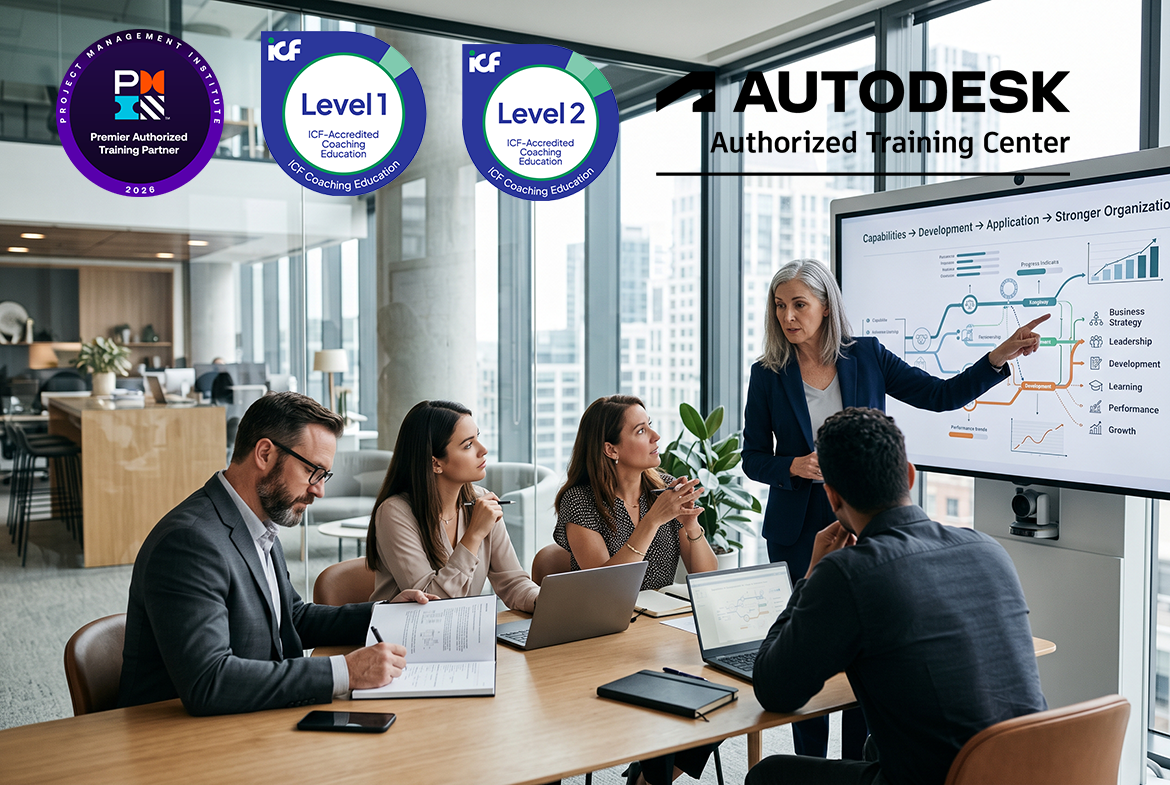
Corporate Development Programs: A Modern Enterprise Strategy
Organizations allocate substantial time and budget each year to employee development: workshops are held, seminars organized, and certifications earned. Yet the most critical question often goes unanswered: What does this development change in the business?
Without a clear, measurable answer, an enterprise may hold numerous training sessions without possessing a strategic development system.
Modern corporate development programs are not random training catalogs. They represent a structured architecture that aligns human capital with long-term business vision, operational capabilities, and strategic competency needs. The core executive question must shift from "Which training should we provide?" to "Which capabilities must our organization build to achieve its future business goals?"
Training is an Event; Development is a Process
Attending a two-day leadership or technical workshop is a positive catalyst. However, if acquired insights are not applied in daily operations, reinforced by leadership, and integrated into workflows, sustained behavioral change rarely occurs.
Sustainable success requires a business-driven approach rather than a training-driven one:
-
Training-Driven: "Which programs should we organize within this year's budget?"
-
Business-Driven: "What competency gaps will arise from our 2–3 year growth, digital transformation, or market expansion targets?"
For instance, if an engineering or project-based enterprise expands into megaprojects, technical software literacy alone is insufficient. The organization equally requires robust risk management, stakeholder alignment, BIM coordination, and change leadership.
Needs Analysis and the Competency Gap
To maximize return on investment and prevent budget waste, Training Needs Analysis (TNA) must operate across three distinct tiers:
$$\text{Required Competency} - \text{Current Competency} = \text{Development Need}$$
| Analysis Level | Strategic Focus | Target Example |
| 1. Organizational Level | Which capabilities are vital for corporate strategy? | Agile operations and digital transformation |
| 2. Role Level | What standards define excellence in a specific position? | Risk and budget management for Project Managers |
| 3. Individual Level | Where are the personal performance and skill gaps? | Transitioning technical experts into people leaders |
One-size-fits-all programs dilute value. While junior professionals require fundamental technical mastery, middle managers need delegation and performance management, and senior executives require strategic foresight and transformation leadership.
From Classroom Training to a Development Ecosystem
High-impact learning extends beyond traditional seminars. Leading models leverage an integrated development ecosystem:
Training → Coaching → Mentoring → On-the-Job Practice → Feedback → Reflection
-
Training: Establishes structured frameworks, methodologies, and technical knowledge.
-
Coaching: Bridges the gap between theory and behavior, helping leaders navigate operational roadblocks and delegation challenges.
-
Mentoring: Accelerates the transfer of institutional wisdom and leadership experience.
-
Practice & Feedback: Anchors concepts into daily workflows with real-time execution and review.
Technical Competencies and the Value of Certification
Corporate development is not limited to soft skills. In project-driven and engineering industries, organizational strength relies on technical capability:
-
Project & Program Management (PMP, Agile)
-
BIM & Digital Construction (Revit, Navisworks)
-
Contract & Site Management (FIDIC standards)
While international certifications validate industry benchmarks, they are not the end goal. The true metric of success is the improved quality of operational decisions, risk mitigation, and project outcomes.
Measuring Impact: L&D Return on Investment
Program efficacy must be evaluated across 4 measurable levels:
-
Engagement & Reaction: Completion rates, participant engagement, and immediate utility.
-
Learning: Depth of newly acquired frameworks, technical tools, and competencies.
-
Behavioral Transfer: Concrete adoption of new workflows and leadership behaviors on the job.
-
Business Results: Reduced error rates, minimized project delays, standardized workflows, and improved team performance.
The 7-Step Corporate Development Framework
-
Clarify Business Objectives: Define 1–3 year strategic priorities.
-
Map Critical Competencies: Identify essential capabilities required for execution.
-
Audit Current State: Assess organizational capabilities and individual baselines.
-
Identify Gaps (Gap Analysis): Detail precise performance and knowledge shortfalls.
-
Architect the Solution: Blend training, executive coaching, mentoring, and technical upskilling.
-
Enable Workplace Transfer: Provide systems and support for immediate operational application.
-
Measure & Iterate: Track ongoing impact on team performance and bottom-line outcomes.
The ICE Academia Approach
At ICE Academia, corporate development is designed as an agile, business-aligned architecture rather than off-the-shelf training sessions. Because every enterprise operates within unique operational realities, we begin with structured needs analysis. We then integrate globally recognized standards, technical masteries (BIM, Project Management), and professional coaching into customized development programs tailored to organizational growth.
A strategic development program is not an operational overhead—it is a direct investment in long-term enterprise value and sustainable competitive advantage.
Frequently Asked Questions
What is the primary difference between corporate training and corporate development?
Corporate training is a short-term intervention focused on delivering specific knowledge. Corporate development is an ongoing, multi-faceted process combining training, coaching, mentoring, and hands-on practice to achieve lasting behavioral and organizational change.
Why is systematic development critical for SMEs?
As small and medium enterprises scale, relying solely on founder expertise creates operational bottlenecks. Structured development standardizes processes, builds mid-level leadership, and enables sustainable business scaling.
How does coaching integrate into development programs?
Coaching translates classroom knowledge into daily executive behavior, enabling managers to resolve real-world leadership challenges, improve delegation, and build decision-making autonomy.