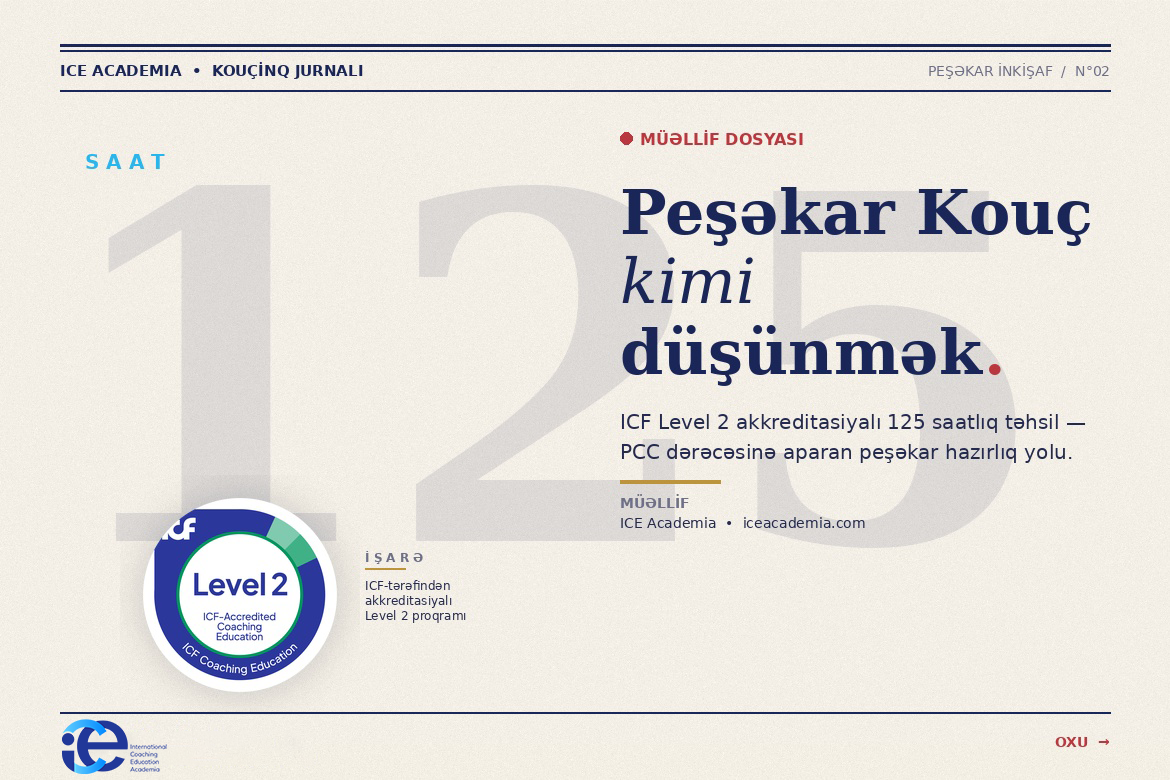
What is Level 2 Coaching Education? The Pathway to Professional Coaching Mastery
Building a professional career in coaching involves much more than simply being a good listener or asking the right questions. True professional mastery requires structured education, hands-on practice, deep integration of ethical principles, and the continuous development of competencies benchmarked against international standards.
Within the International Coaching Federation (ICF) framework, Level 2 accredited coaching education programs represent a critical, advanced milestone in this professional journey. Offering a minimum of 125 hours of education, Level 2 creates a direct educational pathway toward earning the Professional Certified Coach (PCC) credential.
Rather than treating Level 2 as merely another course completion certificate, it should be recognized as a transformative threshold—moving from learning the basics of coaching to thinking and operating as a seasoned professional coach.
What is the Purpose of Level 2 Coaching Education?
The primary goal of Level 2 education is to translate foundational coaching knowledge into deeply internalized professional competencies.
A professional coach is not a consultant or mentor who tells clients what to do. Instead, a coach supports the client's cognitive process, expands their awareness, and fosters a secure, creative environment for clients to formulate their own solutions.
During an ICF Level 2 program, participants develop advanced skills across key coaching domains:
-
Establishing and Maintaining Agreements: Structuring professional boundaries and cultivating a safe, trust-based coaching relationship.
-
Active Listening: Hearing beyond words to observe the client's emotions, underlying priorities, and thinking patterns.
-
Evoking Awareness: Asking powerful questions that reframe perspectives rather than offering ready-made answers.
-
Facilitating Client Growth: Supporting the client in transforming new insights into actionable decisions and sustainable outcomes.
-
Ethical Practice: Upholding confidentiality, navigating conflicts of interest, and maintaining strict alignment with the ICF Code of Ethics.
What is the Difference Between Level 1 and Level 2?
One of the most frequent questions from aspiring coaches concerns the distinction between Level 1 and Level 2 accreditation. Within the ICF framework, the difference lies not only in training hours but in the depth of professional immersion:
| Feature | Level 1 Programs | Level 2 Programs |
| Minimum Training Hours | 60 hours | 125 hours |
| Target ICF Credential | Associate Certified Coach (ACC) | Professional Certified Coach (PCC) |
| Depth & Focus | Fundamental coaching concepts and skills | Advanced application, personal coaching style maturity, and higher professional standards |
Important Note: Graduating from a Level 2 program does not automatically grant a PCC credential. The educational program serves as the rigorous preparation pathway toward fulfilling the complete credential requirements.
The Relationship Between Level 2 and the PCC Credential
It is essential to distinguish between these two concepts:
-
Level 2 refers to the ICF accreditation level awarded to the coaching education program.
-
PCC (Professional Certified Coach) is the individual credential earned by a coach who meets all ICF requirements.
According to the ICF PCC Candidate Guide, candidates who complete a fully accredited Level 2 program can apply via the PCC – Level 2 Path. To earn the PCC credential, candidates must satisfy the following core requirements:
-
125+ hours of accredited coaching education (Level 2)
-
500+ hours of coaching experience (with at least 450 hours paid)
-
Completion of required mentor coaching and performance evaluations
-
A passing score on the official ICF Credentialing Exam
Understanding the ICF Credentialing Exam
A vital milestone along the PCC pathway is the ICF Credentialing Exam (formerly referred to as the Coach Knowledge Assessment — CKA). This exam evaluates how a coach applies ethical guidelines and core competencies in realistic scenarios rather than testing simple rote memory.
-
Exam Structure: 78 scenario-based items. Each item presents a realistic coaching situation with four response options. Candidates must select both the Best Action and the Worst Action for each scenario.
-
Duration & Format: Divided into two equal sections (39 items / 83 minutes each) with an optional 10-minute break, totaling 180 minutes.
-
Passing Score: 460 on a scaled score range of 200–600.
-
Evaluated Domains: Foundation (25%), Co-Creating the Relationship (38%), Communicating Effectively (25%), and Cultivating Learning and Growth (12%).
Who is Level 2 Coaching Education Designed For?
Level 2 coaching competencies benefit a wide range of professionals who work directly with human potential:
-
Aspiring Professional Coaches: Individuals aiming to establish a coaching career aligned with global ICF PCC standards.
-
Leaders and Executives: Managers shifting from traditional directive management toward a "Coaching Leadership Style" to unlock team potential.
-
HR and L&D Professionals: Practitioners looking to enrich organizational culture, talent retention, and internal development programs through coaching.
-
Consultants and Educators: Experts seeking to integrate internationally recognized coaching frameworks into their core professional offerings.
Key Factors to Consider When Selecting a Level 2 Program
Not all coaching programs adhere to the same quality or accreditation benchmarks. When evaluating programs, look beyond whether a certificate is issued:
-
Verify Accreditation: Check the provider’s official status on the ICF Education Search Service (ESS) database.
-
Curriculum Alignment: Ensure full alignment with the ICF Core Competencies and Code of Ethics.
-
Practicum and Mentoring: Inquire about the volume of live practical sessions and included Mentor Coaching hours.
-
Faculty Expertise: Confirm that instructors hold recognized advanced ICF credentials (PCC or MCC).
From Education to Professional Practice
The real value of coaching education emerges when acquired competencies are put into practice with real clients. The roadmap to professional practice follows a structured progression:
Professional development pathway based on international standards (ICF):
-
Level 2 Education (Training, 10 hours of Mentoring, and Internal Assessment)
-
500 Hours of Coaching Experience (Real client sessions)
-
ICF Credentialing Exam
-
PCC Credential (Professional Certified Coach)
Ultimately, true professionalism is defined not just by what you know, but by how effectively you apply that knowledge to empower others.
Ready to Begin Your Journey as a Professional Coach?
At ICE Academia, our mission extends beyond delivering theoretical instruction—we support professionals in transforming learning into tangible real-world value.
Contact ICE Academia today to learn more about our internationally accredited coaching education programs and discover the optimal professional development pathway for your goals.
Frequently Asked Questions (FAQ)
What is Level 2 coaching education?
ICF Level 2 is an accredited education designation delivering a minimum of 125 hours of coaching education, designed as the primary training pathway toward the PCC credential.
Does completing a Level 2 program automatically make me a PCC?
No. Level 2 is the education component. Earning the PCC credential requires fulfilling additional criteria set by the ICF, including 500 hours of coaching experience and passing the ICF Credentialing Exam.
How many coaching experience hours are required for the PCC credential?
The ICF requires a minimum of 500 hours of coaching experience (at least 450 of which must be paid) following the start of your coaching education.
What is the main difference between Level 1 and Level 2?
Level 1 provides a minimum of 60 hours of training aligned with the ACC credential, whereas Level 2 provides a minimum of 125 hours of comprehensive training aligned with the PCC credential.
How can I verify if a coaching program is ICF-accredited?
You can search and verify the accreditation status of any education provider through the official ICF Education Search Service (ESS) directory online.